
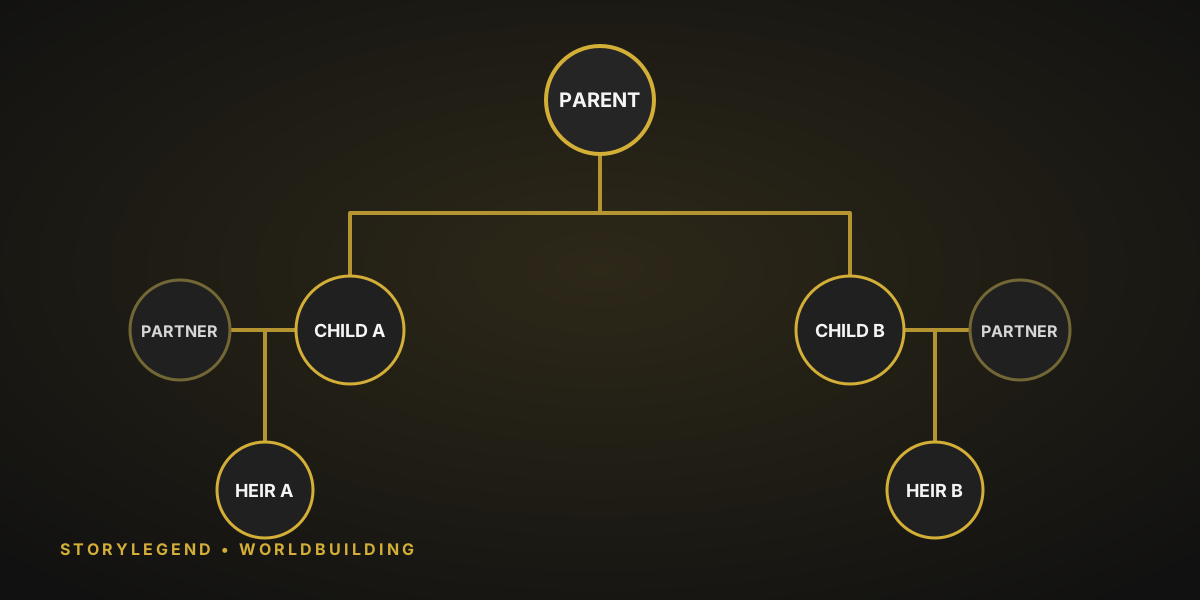
A fictional family tree is not just a diagram of who gave birth to whom. It can work as a compact map of pressure: who holds the money, who was cut off, which marriage split the family, which secret could overturn everything, and which old wound still shapes how people treat each other. Built well, it helps you generate scenes and catch continuity mistakes. Built badly, it becomes an ornate genealogy you never consult.
The difference is purpose. There is usually no need to invent twelve generations because your world feels old. What tends to help is enough family structure to explain the choices your characters face now. This guide walks through one approach—starting with story conflict, then adding only the people, dates, and relationships that earn their place.
Start with the story question, not the oldest ancestor
Before drawing a box, write one sentence about what the family tree must help you understand. Focus on the claim, alliance, secret, obligation, or relationship the chart needs to clarify. That sentence is your filter. If a branch does not affect the answer, you can leave it as an unnamed relative, an off-page connection, or nothing at all.
Choose a focal character next. Readers tend to experience a family through someone specific. Put your protagonist, antagonist, heir, or family outsider near the center and build outward one relationship at a time.
Build the tree in six drafting-friendly steps
Define the present-day conflict
Name the inheritance, estrangement, secret, custody dispute, forbidden relationship, or old grievance driving the plot. Record what each major character believes about it—even when that belief is wrong.
Add the smallest relevant household
Start with parents, siblings, partners, children, and guardians. Include chosen family when they carry the emotional role of kin, but distinguish legal, biological, and social ties.
Extend only the branches that create pressure
Add grandparents for inherited history, cousins for rival claims, or a second marriage for divided loyalties. Stop when another generation no longer changes the current story.
Attach dates and places
Births, deaths, marriages, separations, adoptions, and reigns establish what was possible. Approximate dates are fine during discovery; mark them as estimates rather than pretending they are final.
Record public truth and private truth
For every consequential secret, note what the family says, what actually happened, who knows, and when the truth can surface. This turns backstory into reveal structure.
Audit it against the draft
Check ages, overlaps, naming conventions, inheritance rules, and forms of address. Update the tree when the manuscript changes; do not force a stronger draft to obey an obsolete plan.
What to record for each family member
A name and portrait are rarely enough. Keep each profile brief, but include information that affects scenes. The following fields give you a practical baseline.
| Field | What to capture | Why it matters |
|---|---|---|
| Identity | Full name, aliases, titles, pronouns | Prevents naming and address errors |
| Life dates | Birth, death, marriage, separation | Exposes age and overlap problems |
| Relationships | Biological, legal, romantic, chosen, hostile | Clarifies what each line actually means |
| Claim or role | Heir, caregiver, provider, estranged member, dependent, keeper | Connects family structure to power and responsibility |
| Need and grievance | What they want; what they believe they are owed | Generates conflict rather than trivia |
| Knowledge | Secrets known, suspected, or misunderstood | Helps schedule revelations |
Design relationships that feel lived-in
Lines on a chart describe structure, not emotion. Two relatives may be legally close and emotionally estranged, while a guardian may matter more than a biological parent. Beside each important tie, write a short relationship sentence from both directions that captures what each person wants, fears, or assumes about the other. The mismatch is often where scenes begin.
Also separate kinship from power. A younger sibling can hold the money. A widowed outsider can control access to the family archive. A servant who raised three generations may know more than every titled cousin. Consider making formal ties visible without implying they are the only ties that count.
Things to watch for
- Starting too far back. Begin with the active cast, then add ancestors when a present conflict requires them.
- Using one line for every kind of bond. Label adoption, remarriage, guardianship, disputed parentage, estrangement, and chosen family clearly.
- Making everyone the same age. Vary sibling spacing and generations deliberately, then test whether parental ages and historical events remain plausible.
- Treating the tree as objective truth. Families run on stories. Preserve disputed versions so characters can act on incomplete information.
- Planning without revising. A family map is a living reference. Change it when the manuscript discovers a better answer.
A quick family-tree audit
- Can you explain the central conflict by pointing to three to six people?
- Does every detailed branch affect plot, character, theme, or continuity?
- Are biological, legal, romantic, and chosen relationships distinguishable?
- Do dates support every birth, marriage, death, reign, and disappearance?
- Have you recorded both the accepted story and the hidden truth?
- Does each major relationship contain a desire, fear, debt, or grievance?
- Can you find the answer quickly while drafting a scene?
If the answer to the last question is no, consider simplifying. A smaller, readable tree may serve your novel better than a comprehensive one you avoid opening.
Build a family tree that serves the story
Map fictional bloodlines, character relationships, and profiles in StoryLegend’s Family Tree Builder. Start with the relatives driving today’s conflict, then grow the family only when the story asks for more.
Open the Family Tree BuilderFrequently asked questions
How many generations should a fictional family tree include?
Usually two or three around the active cast are enough to begin. Add older generations only when they explain a claim, tradition, secret, inherited trait, or relationship that matters in the current plot.
Should I include characters who never appear?
Yes, when their existence changes inheritance, family history, obligations, or another character’s choices. Otherwise, leave them unnamed until the draft gives them a job.
What if parentage is a spoiler?
Build the full tree with everything in it, then duplicate it and strip out the spoiler relationships for any version you share or reference while drafting. That way you always have the complete picture for continuity while keeping reveals intact for readers.
Do I need exact dates before drafting?
No. Use ranges or provisional dates, label them clearly, and firm them up during continuity passes. Precision is useful only when it supports the story.